Evaluate Artie when several colleagues need to work with named AI employees without buying a seat for each person. Lindy is a strong candidate when a smaller group wants a shared assistant built around Slack, meeting context and reusable skills. Both support recurring work, so autonomy alone is not a reason to switch.
Artie is our product. This is a documentation-based comparison checked on October 10, 2026, not a hands-on benchmark. Prices below are in USD. The evaluation example below is fictional and does not report tested vendor results.
What you would be buying
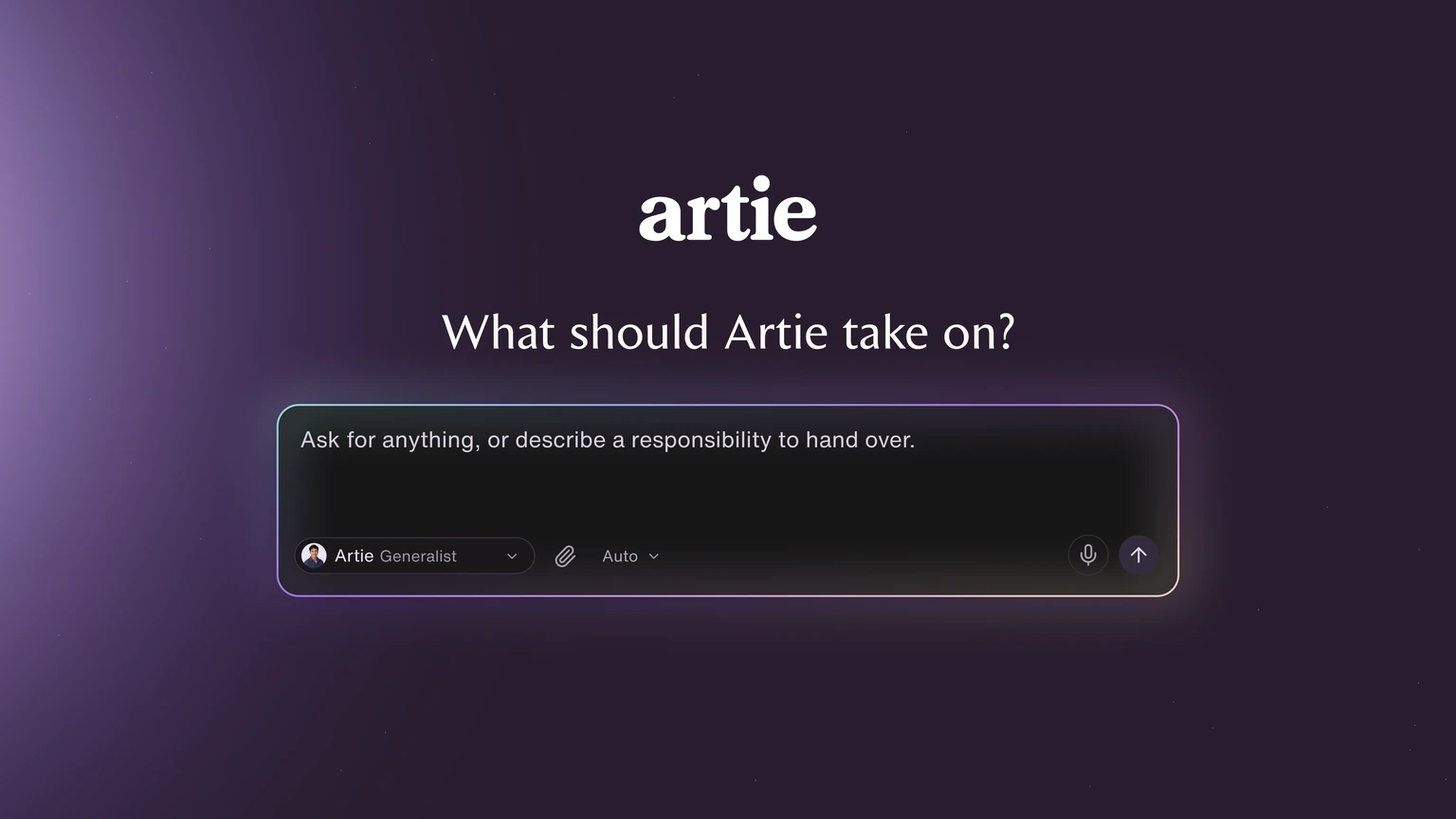
Artie combines a team of employees, a work computer and company knowledge within granted access. You can create a role with the tools and responsibilities it needs. Its published communication options include Slack, text, WhatsApp, email, phone calls and Google Meet.
Lindy emphasizes a shared assistant with scheduled routines, a meeting library, skills colleagues can reuse and memory you can edit as files. Its pricing page also lists iMessage and connected-tool work. This is a meaningful alternative for a team that wants to turn recurring requests into reusable instructions.
For example, a customer success lead might want an employee responsible for the weekly account-risk brief, while marketing has a separate employee preparing campaign materials. Artie's role structure is a reason to evaluate it for those distinct remits. If the immediate problem is retrieving meeting context and preparing one team's follow-ups, Lindy's existing meeting-and-routine model may be enough.
Pricing changes with the number of people using Lindy
Buying detail | Artie | Lindy |
|---|---|---|
Starting paid option | Team: $100/month | Lindy: $49.99 per active user/month |
Included monthly capacity | 10,000 shared credits | 5,000 credits per paid user, pooled |
Additional people | No separate seat fee | People who use Lindy, including Slack mentions, can require a seat |
Extra capacity | Manual top-ups from $13 per 1,000 credits, or optional automatic funding | $10 per 1,000 top-up credits |
Trial and access | Waitlist, with a Free plan | $50 in trial credits, valid for seven days |
Artie's Free plan starts with 1,000 credits, with up to 13,000 more earned through onboarding. Free credits do not renew monthly.
Sources: Artie pricing and Lindy pricing. This table uses Lindy's dedicated pricing page, which lists $49.99 per active user for 5,000 monthly credits. Its homepage still lists $29.99 for 3,000. Confirm the plan and allowance at checkout.
At the $49.99 allowance shown above, three active users cost $149.97 per month and contribute 15,000 credits. Ten cost $499.90 and contribute 50,000. Those are subscription calculations, not equal-work comparisons with Artie. Credits are different units in the two products.
The practical budget question is how many people will direct the assistant. A department with two operators has a different Lindy bill from a company where ten account owners regularly mention it. Artie's subscription does not grow with that seat count, but more work still consumes more credits. Neither headline price tells you the cost of a finished report.
Compare the handoff and the approval process
To compare the handoff, give both products the same short fictional account review: one customer has an unresolved onboarding issue, another has a routine support question that is already resolved, and a third needs a usage check. Ask for a draft that separates confirmed risks from open questions and names the next action and owner. Then tell both products that the onboarding issue has been fixed. The revised brief should remove that active risk while retaining the unanswered usage question.
Have a second colleague submit the correction through the supported team route. Record whether the same brief is updated and whether that colleague becomes a billed user. This tests the two buying questions together: how work passes between people and what participation costs.
Lindy's pricing FAQ says actions with outside impact wait for approval. Artie's security documentation explains that its approval decisions use AI judgment and can be wrong. Treat the former as a vendor-described control, not a tested guarantee. For a draft-only trial, give either product a destination where it cannot send customer messages or alter account records.
One entitlement needs care: Lindy's pricing page includes computer use on its Team card but also retains Pro/Max wording elsewhere. Confirm the entitlement in the plan you are buying if browser work is essential. That inconsistency does not justify claiming Lindy lacks the capability.
Which should you choose?
Start with Artie if your requirement is several distinct company responsibilities, broad colleague participation and communication that includes phone or video as well as chat. Confirm access and the connections needed for those responsibilities before committing. Join the Artie waitlist with the first role you want to delegate.
Choose or keep Lindy when its shared meeting context, editable skills and routines solve your problem for a clearly defined set of users. There is no need to migrate a successful workflow merely to change the employee name. Compare the accepted brief, correction effort and actual usage before expanding either setup.