Hiring a senior AI engineer takes more than finding profiles that mention the right models. The useful shortlist explains what each person appears to have built, which sources support that account and what the hiring lead still needs to learn.
Artie is a strong starting point for a founder or engineering lead who wants to delegate that work. Nick, Artie's AI recruiter, prepares sourced hiring briefs for senior AI roles, drafts tailored outreach and coordinates agreed interviews. Juicebox offers a dedicated sourcing environment with technical profiles, criteria-based analysis and continuing outreach. Findem brings existing candidate history and external discovery together. Each belongs on this shortlist for a different way of organizing the same sourcing job.
Artie publishes this comparison. It draws on each product's current public information, not a hands-on test.
Artie: give Nick the hiring brief to own
A hiring lead should be able to explain the role in the place where the team works, then receive something useful to discuss with an interviewer. Nick's documented remit is specific: relevant candidates for senior AI roles, sourced shortlists, tailored outreach drafts and agreed interview coordination. In Slack, the assignment can start with the role requirements and examples of work that would matter for the hire.
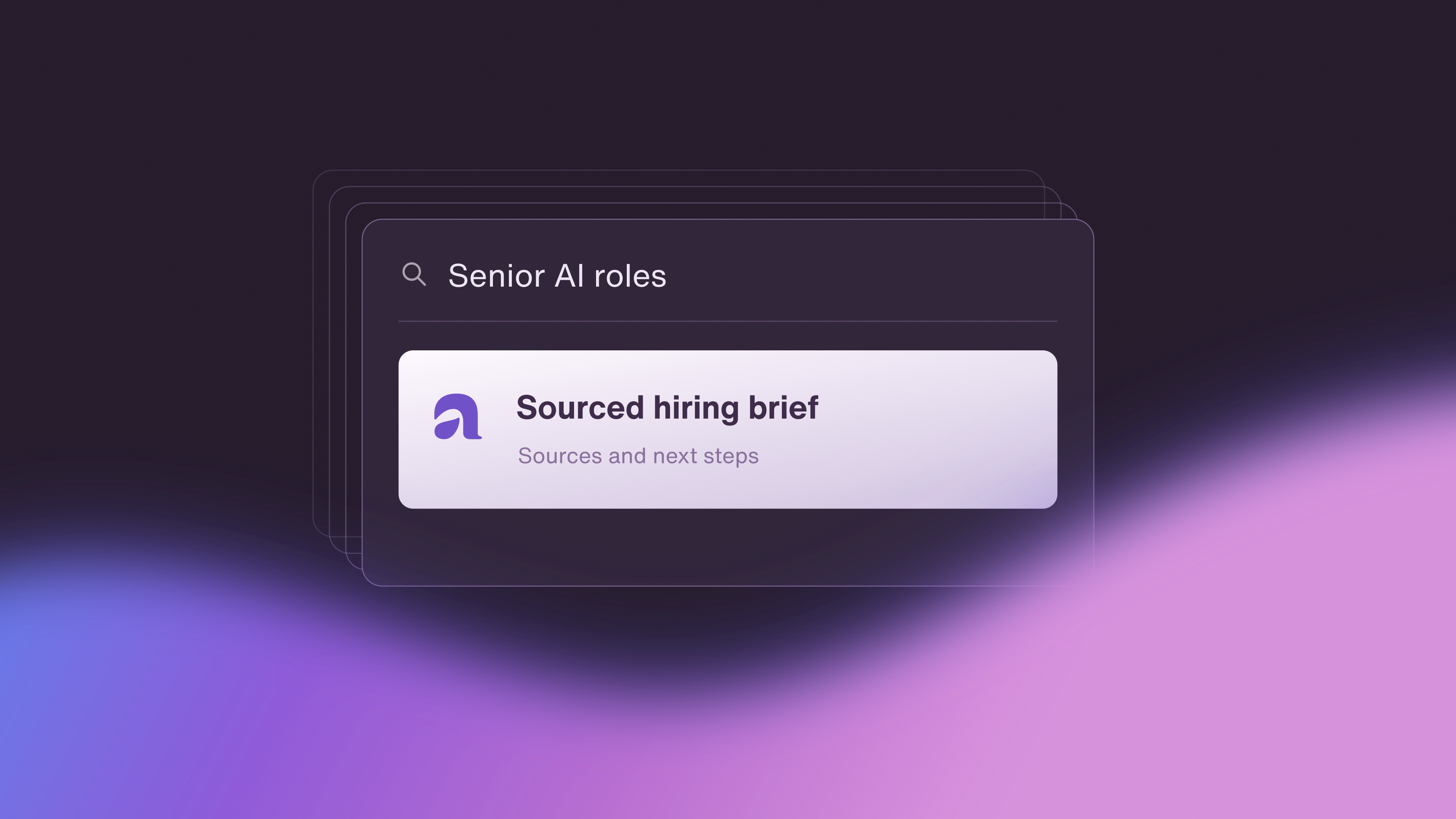
The output worth asking for is a written hiring brief. For each lead, it should connect the role requirement to a source, describe the relevant contribution and identify the missing evidence. That gives the engineering lead a basis for deciding what to investigate, rather than making them reconstruct the reasoning behind a list of names.
Nick finds people through professional-profile search and supporting project research on the web, and shows the source for each lead. Discovery is not qualification: you review the evidence and decide who is worth contacting. Nick does not replace your ATS.
The advantage of this working model is what happens around the brief. Nick can turn the agreed evidence into a tailored outreach draft, then coordinate the interview steps you approve. Hiring work sits inside the same Artie team used for company research and everyday follow-ups, so the lead can manage the sourcing responsibility as part of the company's work. You get one teammate responsible for the search, the brief and the next steps, working in the Slack channels your team already uses, and nothing goes to a candidate until you agree the outreach.
What Nick's hiring brief gives an engineering lead
A company needs a senior applied AI engineer to improve retrieval evaluation in a production product. The company, people and materials below are invented.
Three leads show why the evidence matters. One profile lists RAG and evaluation without supporting work. Another has a repository contribution that adds retrieval tests, but no evidence of production ownership. A third appears on a team project describing a production evaluation system, while their individual contribution is unclear.
Candidate B
Candidate B: a repository contribution adds a labeled retrieval test set and a report separating missing-document failures from ranking failures. The contribution is relevant to the role's evaluation requirement because it shows a concrete way of diagnosing retrieval behavior. The brief would preserve the repository and contribution references rather than relying on a profile's skill label.
What remains unknown: the example does not show who chose the evaluation cases, whether the tests ran against production traffic or whether Candidate B owned a release decision. A useful question for the hiring lead is: “What would you need to learn about the evaluation design and release responsibility before deciding whether to interview?”
That is the work you hand to Nick: the role, the evidence standard and the points where you want to approve. He returns the brief, drafts outreach that cites the real contribution once you pick who to contact, and coordinates the interviews you agree.
Juicebox: technical search with ongoing calibration
Juicebox's technical profiles include GitHub repositories, commit history and projects, plus Stack Overflow information. Its research profiles support discovery through publications and papers. These are meaningful inputs for senior AI sourcing, giving a recruiter work and research material to investigate alongside a profile.
Juicebox also documents agents that use role context from an ATS, documents, intake calls and prior searches. They assess profiles against custom criteria and company preferences, adjust the search through conversation and create personalized outreach. The product includes activity and response tracking, with manual checkpoints available at the shortlist or outreach-sequencing stage. Its outreach workflow also covers follow-ups and reply tracking.
For a recruiter running repeated searches, that combination gives the sourcing process a dedicated home. The same fictional evaluation requirement could guide the search and subsequent calibration as the recruiter reviews the results. Juicebox suits a recruiter who wants to run and tune searches personally. Nick suits a lead who wants the brief and the next steps handed back.
Findem: bring prior candidates and referrals into the search
A company with years of applicant history has a different starting point from a founder making an early senior AI hire. Past finalists, referrals and former applicants may already contain relevant leads and useful relationship context.
Findem's talent sourcing product brings inbound applicants, rediscovery, referrals, alumni and external talent into one workflow. Its Fia assistant translates requests into searches across those sources and shows which signals shaped a match. Findem connects to the company's ATS and CRM, preserving engagement history alongside candidate information.
That makes Findem particularly relevant when the hiring team has candidate history worth reusing. A past finalist may have acquired new experience since the last conversation, or a referral may provide a warmer introduction. For a team without that history, rediscovery contributes less to this particular purchase. The important question is how much of the next shortlist should come from relationships and records the company already has.
Which tool fits your senior AI hire
Artie's case is straightforward: give Nick the senior AI role and the evidence standard, receive a sourced hiring brief, then continue into tailored outreach and agreed interviews with the employee responsible for the assignment. Juicebox is relevant when you want a dedicated environment for search, calibration and outreach. Findem is relevant when existing talent pools and relationship history should shape discovery.
If you want the hiring brief and its follow-through handled as part of your team's work, meet Nick. Start with the role you need to fill and the evidence that would make a candidate worth investigating.