A useful company brief connects what changed outside the account with what your team already knows. A product announcement matters more when it sits beside the unanswered question from your last call. Artie brings those pieces together before the meeting, with links back to the news, email, document or CRM note behind each point.
This shortlist covers Artie, Apollo, LinkedIn Sales Navigator and Crunchbase for B2B teams researching companies they may sell to or partner with. It focuses on account conversations, from discovering a promising company to arriving with a current relationship brief. It does not cover investment research or financial due diligence.
Artie publishes this guide, based on current product information rather than comparative hands-on testing.
Artie brings company news and your relationship into one brief
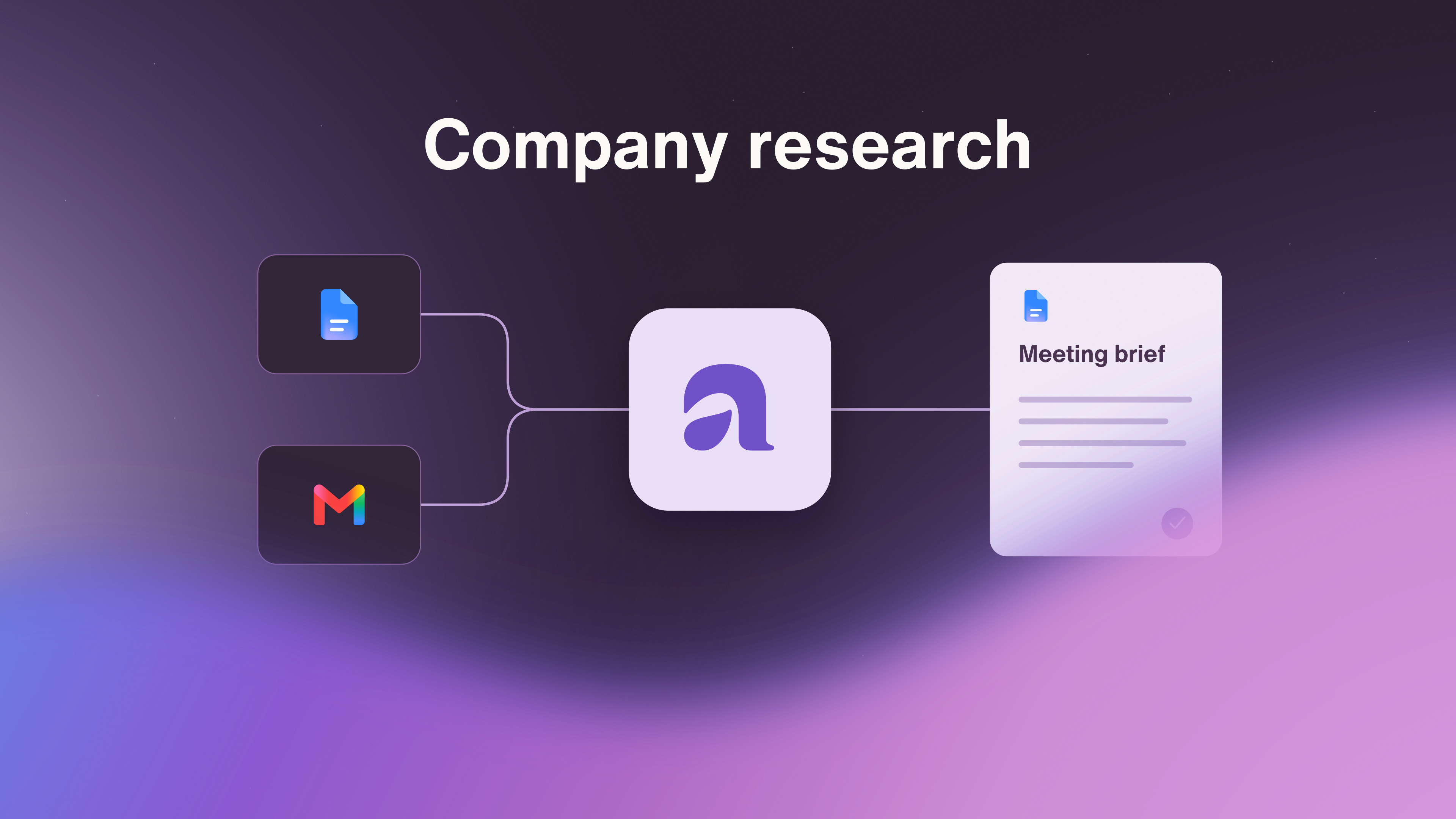
Artie prepares meeting briefs from the calendar invitation, earlier email threads, shared documents, connected CRM notes and public information about the company and attendees. The brief arrives in Slack or a Google Doc at the time you set before the meetings you choose.
That is valuable when the account already has a history with several people on your team. A company profile can explain the business. The meeting brief also brings back the question your colleague asked, the material you promised and the open issue that could change the conversation. Artie puts attendees, context, open items and suggested points to raise together, with a source for each point.
Consider a fictional partner called Northstar. It has announced an integration that could affect a joint customer project. Your last email promised a technical walkthrough, while a shared planning document still leaves the integration date open. A useful brief would connect the announcement to those existing commitments:
Company development: the new integration announcement, with its date and source.
Our open item: the promised technical walkthrough, linked to the email.
Question for the meeting: does the announced integration change the walkthrough's scope or timing?
Still unknown: the date has not been agreed in the planning document.
The relationship lead can walk into the call with the relevant development and the team's unfinished work in the same view. Where the connected sources contain no history or answer, Artie flags the gap.
For a portfolio that needs attention between meetings, Artie also offers ongoing account research: current company news, CRM context and sourced briefs that stay updated as priority accounts develop. Meeting preparation and ongoing account research are separate responsibilities. Either can give the team a concrete finished output, rather than another search tab to revisit.
Apollo keeps research close to sales work
Apollo AI research can research companies and people, save results to reusable fields, filter prospects and feed messaging or automated workflows. Its assistant also supports scheduled outbound work. This is more than a database lookup: research can become part of the team's sales process.
Apollo also handles pre-meeting insights. Its templates cover company priorities, decision makers, company summaries and objections from past meetings. Teams can create their own templates and access the insights from Google Calendar through Apollo's extension. In the Calendar extension, the meeting overview also shows existing notes, linked deals and related recorded conversations. Insights are selected and run for each meeting.
For a team already working in Apollo, keeping that context beside prospect records and outreach is useful. Artie's brief starts from a different place. It arrives on its own before the meetings you choose and reads the email threads and shared documents where partner commitments often sit, alongside connected CRM notes. For a relationship that runs through inboxes and planning docs rather than Apollo sequences, that is the brief you would otherwise assemble by hand.
Sales Navigator adds LinkedIn's company context
Account IQ in LinkedIn Sales Navigator puts an AI-generated company summary on the account page. It is available across Sales Navigator subscriptions, and product and service personalization can tailor the insights to why your offer fits the account.
Its information sources include first-party LinkedIn data, such as the executive team and headcount changes, alongside public sources such as company filings. LinkedIn positions it for preparing buyer meetings, with priorities, likely pain points and financials, and account alerts track growth, job openings and leadership changes.
The summary itself refreshes on a 30 to 90 day cycle, and some generated passages have no specific citation, so a development that is the reason for today's call is worth confirming at its source.
In the Northstar example, Sales Navigator helps the lead understand the company and its people. The Artie brief adds the team's own email promise and planning document to the meeting's public context. The useful output is the connection between the company and your relationship with it.
Crunchbase helps find the companies worth researching
Crunchbase combines private-company data, live signals and predictions about events such as funding, growth and acquisitions. Its Scout search lets users ask company-discovery questions, including which companies show growth signals or may raise funding.
That serves a different part of the account workflow. Before Northstar is on a partner list, private-market signals can help a team find companies to investigate. Once a conversation is booked, the team still needs to connect what it learns with its own relationship history.
Crunchbase's predictions are forecasts, not confirmed events. They help guide discovery, while Artie prepares the sourced brief the relationship lead receives before the call.
Bring the next conversation into focus
Start with Artie when useful account preparation means bringing company news, past conversations and unfinished commitments into one brief before the meeting. Give your employee the accounts and meetings that matter, then let the brief arrive where your team already reviews its work.
Apollo keeps research close to prospecting and sales workflows. Sales Navigator supplies LinkedIn company context. Crunchbase adds private-market discovery. Those can be valuable inputs or alternatives depending on the work already happening in your team. Artie turns the information around an account into a specific conversation you are ready to have.